S3E10 · 52 minutes
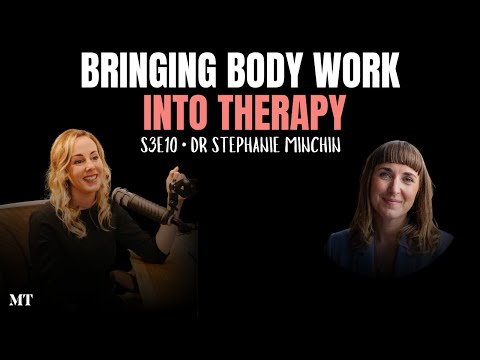
Bringing body work into the room
Dr Stephanie Minchin shares consent-led ways to integrate body work with talking therapy.
 ▶WATCH ON YOUTUBE
ABOUT THE EPISODE
How can we work with the body without losing clinical rigour?
Stephanie and Natalie explore breath, posture and nonverbal information as part of therapy, without turning the session into a yoga class.
They discuss pacing, consent, grounding and how therapist embodiment supports safe, integrated practice.
- Noticing body cues in therapy
- Inviting, not imposing, body-based work
- Therapist embodiment and CPD
- Safety, pacing and repair
What can therapists notice when they include the body?
Dr Stephanie Minchin and Natalie explore breath, posture and nonverbal information as part of therapy. These cues can add to what is being said without requiring the therapist to abandon talking therapy or turn the session into a yoga class.
Attending to the body is not the same as deciding in advance what a particular sensation or posture means. It can begin with careful observation and an invitation to become curious, while keeping the client's own experience at the centre of the conversation.
How can body-based work remain safe and collaborative?
The episode emphasises inviting rather than imposing body-based work. Consent, pacing and grounding matter, particularly when attention to physical experience could feel unfamiliar, exposing or activating for the client.
Stephanie also discusses therapist embodiment, continuing professional development and repair. The therapist's own steadiness can support the work, but it does not replace clear boundaries, appropriate training or a willingness to pause and review when an exercise is not helping.
Related listening: For a formulation-led example of linking bodily sensations with anxiety, listen to A New Way to Formulate Health Anxiety, covering shame, earlier experiences, safety behaviours and collaborative mapping.
SHOW NOTES
What we cover
STAY IN THE LOOP
Don’t miss a new episode
Join the Mastering Therapy podcast email list.
We’ll email you about new Mastering Therapy podcast episodes. You can unsubscribe at any time.
Listen in your usual app
Choose where to listen or watch the full conversation.
The Mastering Therapy podcast is for informational and educational purposes and is intended for qualified professionals.