S5E4 · 38 MINUTES
How therapists can start and grow a business
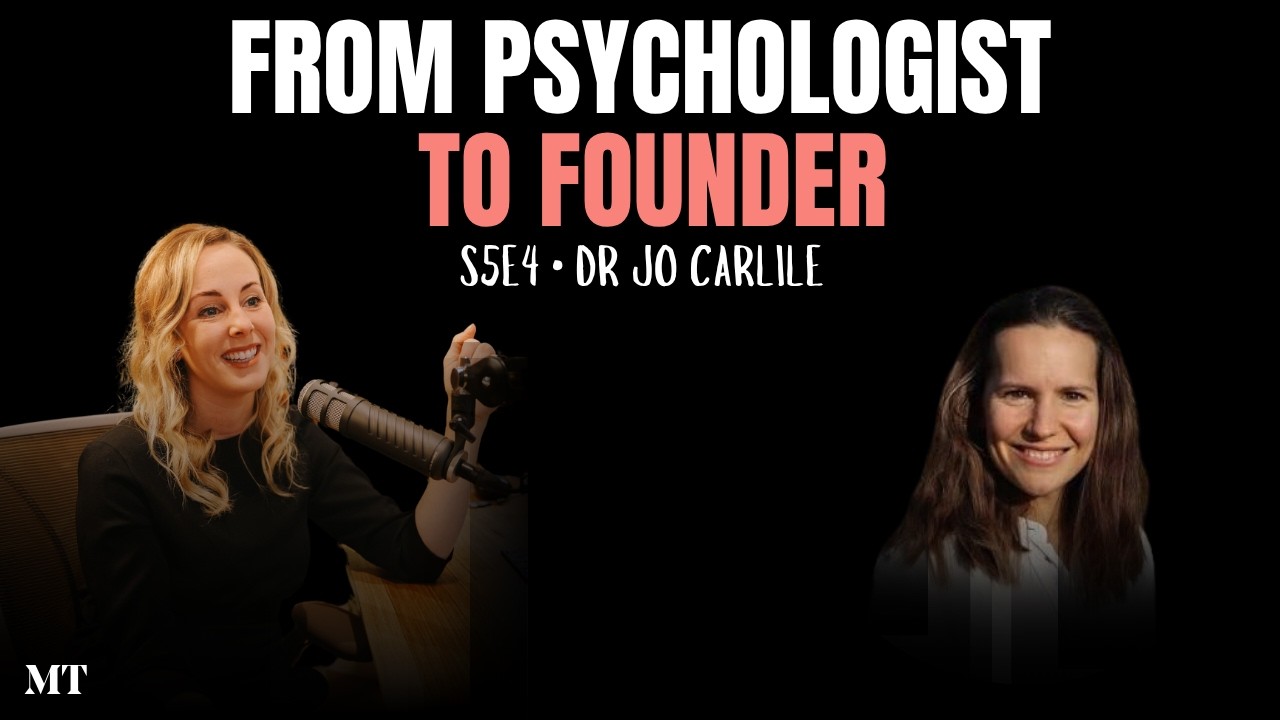
Dr Jo Carlile joins me to talk about moving from private practice into entrepreneurship — from finding support and testing an idea to building at a pace that still leaves room for the rest of your life.
 ▶WATCH ON YOUTUBE
ABOUT THE EPISODE
What happens when a therapist has a business idea?
Jo explains why she now sees every private therapist as a founder, and how noticing gaps in her own work led to building Pear.
We talk honestly about finding support, testing an idea before investing heavily, stepping back from fundraising and building a business at a pace that fits your life.
- Why private therapists already use entrepreneurial skills
- Finding support without necessarily needing a co-founder
- Testing demand before spending heavily on a polished product
- Fundraising, visibility and choosing a sustainable pace
- Containing founder work so it does not fill every available hour
Start with the problem, not the polished product
Jo’s advice for a therapist with a business idea is deliberately practical: begin by talking to people. Find out whether the problem you have noticed is shared by others and test whether anybody wants the solution before investing heavily in a polished product.
You do not need to possess every technical or commercial skill at the outset. A co-founder may be useful, but support can also come from mentors, founder networks and people with complementary expertise. The early task is to learn, test and adapt rather than to know exactly what the finished business will become.
Build at a pace that fits your life
Jo and her co-founder initially explored fundraising, but stepped back when the expected speed of growth no longer matched the business or the lives they wanted to build. Investment can create momentum, but it may also change who influences the pace and what the founders are expected to prioritise.
The conversation also explores a less visible cost of founder work: it does not always end when the working day does. Clinical sessions often have clearer boundaries, while a growing business can spread into evenings, weekends and mental space. For Jo, sustainable ambition means deciding how much room the business can take up and allowing it to grow at a pace that remains compatible with clinical work, parenting and life outside work.
Related listening: For the practical systems behind a growing practice, listen to How to Streamline Your Practice, covering admin friction, scheduling, email, invoicing and paperless working.
SHOW NOTES
What we cover
STAY IN THE LOOP
Don’t miss a new episode
Join the Mastering Therapy podcast email list.
We’ll email you about new Mastering Therapy podcast episodes. You can unsubscribe at any time.
Choose how you want to listen
Listen in your usual podcast app, or watch the full conversation on YouTube.
The Mastering Therapy podcast is for informational and educational purposes and is intended for qualified professionals.