SEASON 4 · EPISODE 6 · 49 min 11 seconds
Empathic confrontation and mode mapping in schema therapy
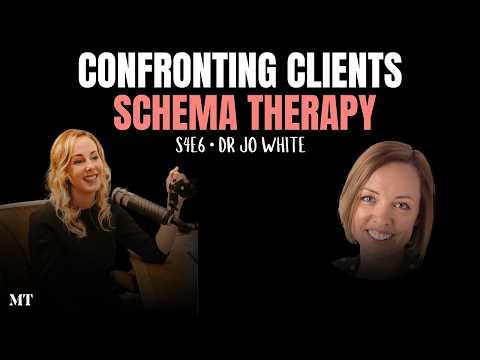
A practical introduction to schemas, modes, limited reparenting and empathic confrontation. Jo explains how to map patterns collaboratively and balance warmth with challenge.
 ▶WATCH ON YOUTUBE
ABOUT THE EPISODE
What we cover
A practical introduction to schemas, modes, limited reparenting and empathic confrontation. Jo explains how to map patterns collaboratively and balance warmth with challenge.
- Explaining schemas and modes
- Limited reparenting and boundaries
- Empathic confrontation
- Mode mapping and experiential techniques
How can mode mapping make repeated patterns clearer?
Dr Jo White introduces schemas and modes as a practical way to organise recurring emotional and relational patterns. Collaborative mode mapping can help therapist and client identify different states, what tends to trigger them and how they relate to one another.
The map is not simply a set of labels. Used well, it gives the client and therapist a shared picture they can return to, revise and connect with what is happening both inside and outside the therapy room.
What does empathic confrontation involve?
Empathic confrontation tries to hold warmth and challenge together. The therapist acknowledges why a coping response developed and the protection it may have offered, while also helping the client look at the difficulties it now creates.
The episode connects this stance with limited reparenting, boundaries and experiential techniques. Challenge needs to sit inside a collaborative relationship; without empathy it can feel attacking, while empathy without enough honesty may leave an important pattern untouched.
Related listening: For another practical framework for understanding repeated patterns, listen to Introduction to Transactional Analysis on ego states, life scripts and the drama triangle.
SHOW NOTES
In this conversation
STAY IN THE LOOP
Don’t miss a new episode
Join the Mastering Therapy podcast email list.
We’ll email you about new Mastering Therapy podcast episodes. You can unsubscribe at any time.
Listen in your usual app
Choose where to listen or watch the full conversation.
The Mastering Therapy podcast is for informational and educational purposes and is intended for qualified professionals.