SEASON 2 · EPISODE 9
The role of religion in therapy
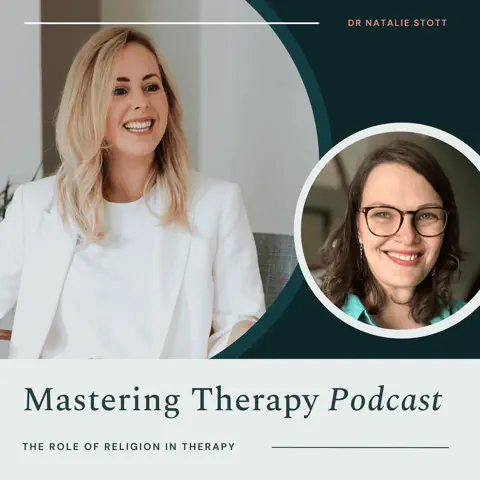
Dr Sarah Morris joins Natalie to explore how religion and faith can show up in the therapy room.
ABOUT THE EPISODE
What we cover
Dr Sarah Morris joins Natalie to explore how religion and faith can show up in the therapy room.
- Faith transitions
- Therapist assumptions and bias
- Spiritual abuse and trauma
- Thoughtful self-disclosure
How can therapists explore faith without making assumptions?
Religion and faith may be a source of meaning, community, conflict or change, and those experiences cannot be understood from a label alone. Dr Sarah Morris and Natalie explore how therapist assumptions and bias can shape what gets noticed or left unasked.
A curious conversation allows the client to describe the place faith has in their life. This may include a continuing belief, a faith transition or uncertainty, without the therapist deciding in advance whether religion is protective, harmful or irrelevant.
What needs particular care when religion has been harmful?
Spiritual abuse and trauma can involve experiences that are difficult to name, especially when belief, belonging and authority have been closely connected. Therapy needs room for the client's meaning and pace rather than treating their experience as a debate about religion.
The episode also considers thoughtful self-disclosure. Any disclosure needs a clear therapeutic purpose and attention to its effect, so that the therapist's own beliefs or experiences do not become the centre of the client's work.
Related listening: For another area where therapist discomfort can narrow the conversation, listen to Why Therapists Must Talk About Sex, covering sexual wellbeing, medication, libido and opening the subject in therapy.
STAY IN THE LOOP
Don’t miss a new episode
Join the Mastering Therapy podcast email list.
We’ll email you about new Mastering Therapy podcast episodes. You can unsubscribe at any time.