S1E1 · 43 MINUTES
Working with a strong inner critic
Dr Chris Irons joins me to explore how Compassion-Focused Therapy can help us understand self-criticism, its protective functions and the distress it can create.
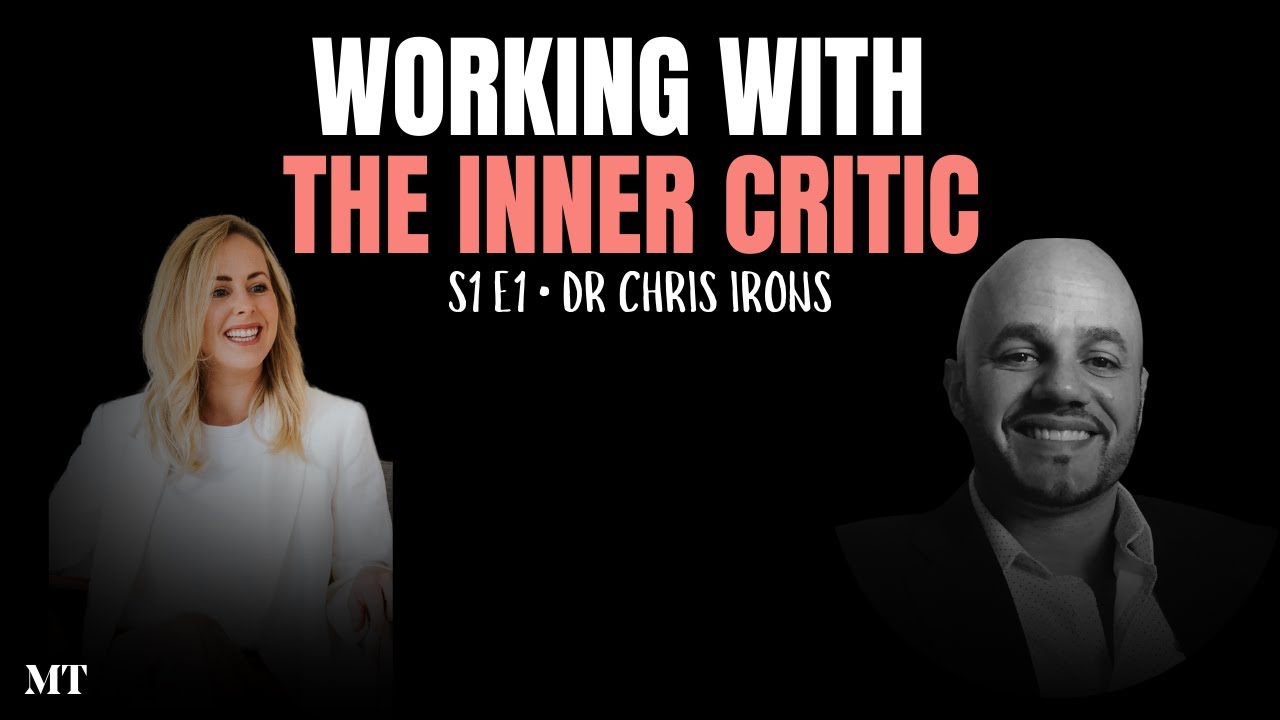 ▶WATCH ON YOUTUBE
ABOUT THE EPISODE
How do you work with a client whose inner critic feels impossible to shift?
We explore how to identify self-critical patterns, understand what the critic may be trying to protect the client from, and respond without simply fighting or trying to remove it.
The conversation includes practical ways of working with imagery, compassionate writing and Compassionate Mind Training, alongside reflections on managing distress when exercises feel difficult.
How can therapists respond to a strong inner critic?
When a client’s self-criticism feels entrenched, it can be tempting to challenge the critic or try to replace it with kinder thoughts. In this conversation, Chris offers a different starting point: notice the pattern, understand what the critic may be trying to protect the client from, and explore the threat or shame beneath it.
Practical ideas discussed include compassionate imagery, compassionate writing and Compassionate Mind Training. The emphasis is not on forcing self-compassion, but on pacing the work carefully and noticing when an exercise feels difficult or increases distress.
You’ll hear ideas for:
- Exploring the function of self-criticism before challenging its content
- Helping clients notice how the critic affects them emotionally and physically
- Introducing compassion-focused exercises carefully
- Adapting the work when compassionate practices feel threatening or uncomfortable
This is an educational conversation for qualified therapists rather than a fixed protocol. The ideas need to be considered alongside your own formulation, professional judgement and the client’s needs.
Related listening: For another practical conversation about self-critical patterns, listen to Working with Perfectionism, covering different forms of perfectionism, core beliefs, cognitive restructuring and behavioural experiments.
SHOW NOTES
What we cover
STAY IN THE LOOP
Don’t miss a new episode
Join the Mastering Therapy podcast email list.
We’ll email you about new Mastering Therapy podcast episodes. You can unsubscribe at any time.
Choose how you want to listen
Listen in your usual podcast app, or watch the full conversation on YouTube.
The Mastering Therapy podcast is for informational and educational purposes and is intended for qualified professionals.